
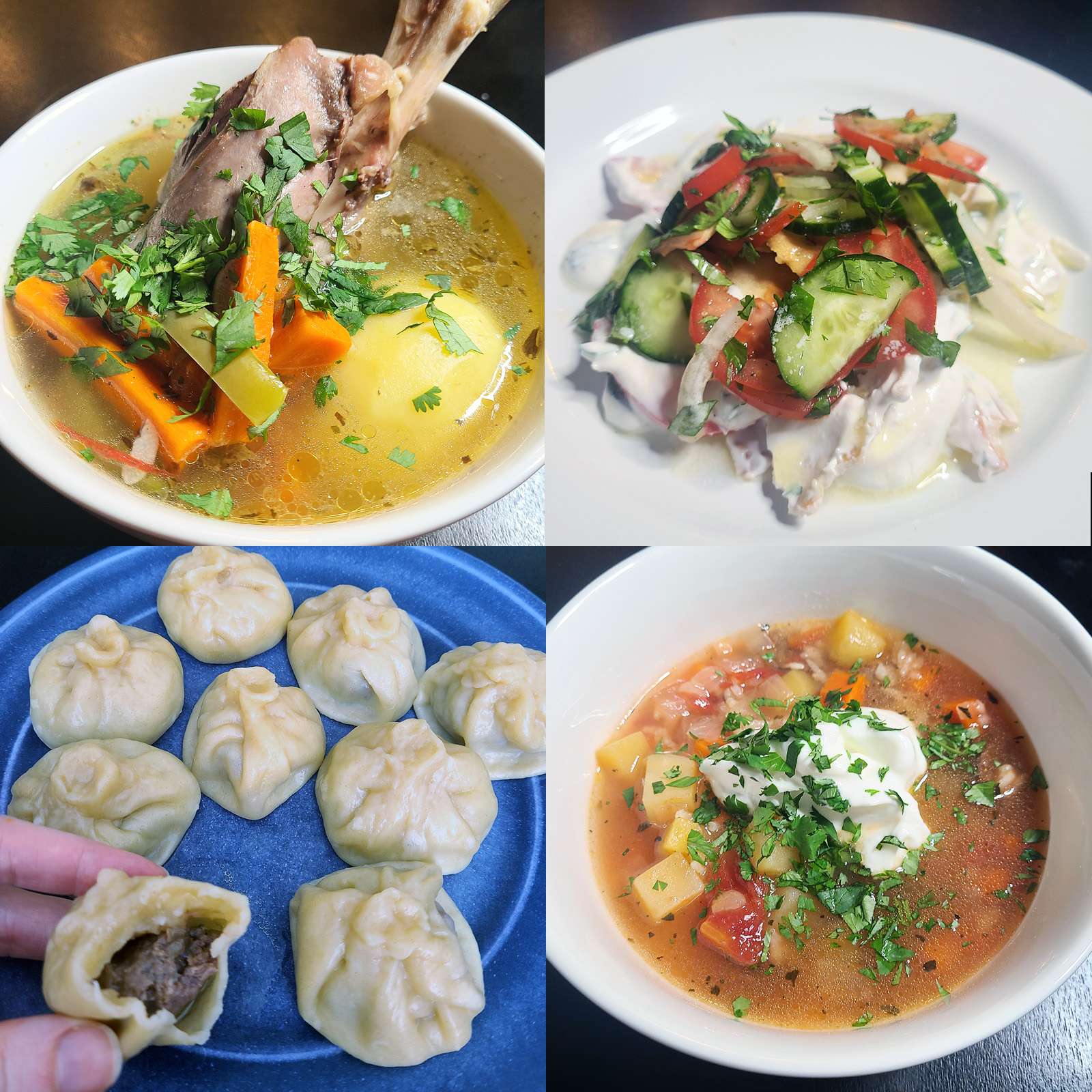
I was happy to return to Central Asian cuisine this week, since I’ve generally been a fan of the simple yet flavorful dishes. I think I went a little overboard with the number of dishes, but that’s better than not being able to find enough to make!
Tajikistan is a mountainous, landlocked country in Central Asia, bordered by Afghanistan, China, Kyrgyzstan, and Uzbekistan.
The region has been inhabited since ancient times and was once home to the Sogdians, a Persian-speaking people who became important traders along the Silk Road. It was later part of several Persian empires before being conquered by Arab forces during the 8th century, leading to the spread of Islam.
The Samanid Empire, remembered as a golden age of Persian culture, emerged during the 9th century. The empire covered parts of several neighboring countries as well as Tajikistan, but it is particularly important to modern Tajik identity. Ismail Samani, one of its most influential rulers, is now considered a national hero.
Over the following centuries, the region was controlled by various powers, including the Mongols, Timurids, and Uzbek khanates. The Russian Empire conquered much of Central Asia during the 19th century, and Tajikistan eventually became part of the Soviet Union.
In 1991, as the Soviet Union was collapsing, Tajikistan declared independence. A civil war began the following year and continued until a peace agreement was signed in 1997.
Today, Tajikistan retains a strong Persian cultural identity, and Tajik—the official language—is closely related to Persian and Dari. Islam is the dominant religion, though the country is constitutionally secular.
What Do People Eat in Tajikistan?
Tajik cuisine shares many similarities with the food of neighboring Uzbekistan and Afghanistan, while also displaying the country’s Persian heritage and years under Soviet rule. Bread, rice, meat, dairy products, vegetables, and legumes form the basis of many meals.
Bread is particularly important and accompanies almost every meal. It is typically shaped into a round loaf, decorated in the center, and baked against the walls of a clay oven called a tandyr. Bread is treated with great respect, and it is traditionally torn by hand rather than cut with a knife.
Lamb and beef are the most common meats, while pork is less widely eaten because most Tajiks are Muslim. Seasonings such as cumin, coriander, black pepper, garlic, and fresh herbs add flavor. Chilies are also used, though most dishes are not particularly spicy.
Fruit grows well in many parts of Tajikistan, and grapes, melons, pomegranates, apricots, and peaches are widely enjoyed. Dried fruit and nuts are also common, particularly during the colder months. Tea is central to Tajik hospitality and is usually offered to guests along with bread, fruit, nuts, and sweets.
What I Made
- Plov (Rice with Beef, Onion, and Carrots)
- Fatir (Flaky Flatbread)
- Qurutob (Flatbread with Salad and Yogurt Sauce)
- Kulcha (Rich Flatbread)
- Shurba (Lamb and Vegetable Soup)
- Mastova (Rice and Beef Soup)
- Manti (Beef Dumplings)
- Chagaldak (Fried Dough with Herbs)
Scroll down to read about other popular Tajik dishes I didn’t make!
Plov (Rice with Beef, Onion, and Carrots)
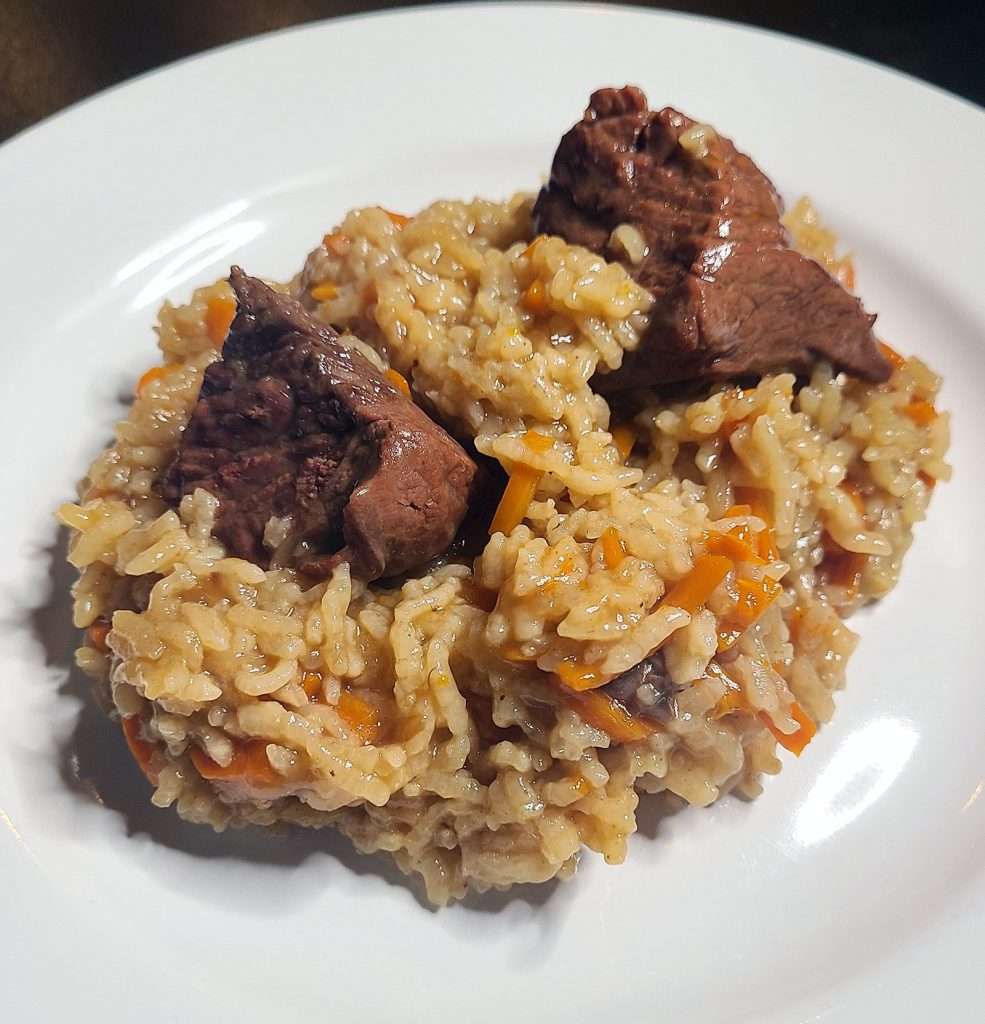
Plov is a popular rice dish served all over Central Asia, and even beyond. It usually includes onions and carrots, as well as some kind of meat. I’ve actually made plov before for Kazakhstan and Azerbaijan, but this is a version from a Tajik person on Reddit. They said that plov is made in three stages: frying, boiling, and finally steaming.
First, I thinly sliced some onions and added them to a pot with oil. I cooked them until they were golden brown, then added large pieces of beef chuck. Once the beef was browned on all sides, I added julienned carrots, followed by cumin.
After cooking for a few minutes, I added enough hot water to cover everything, along with some salt. I covered the pot and let the mixture simmer for about an hour.
In the meantime, I soaked my rice in water. The recipe suggested I use Arborio rice as a substitute for the kind of rice you would use in Tajikistan. However, I used Calrose rice instead since I had it on hand.
I drained the soaked rice and added it to the pot, then increased the heat and let most of the water cook away. I covered the pot and reduced the heat, and let the rice steam until it was done.
I really enjoyed this. The ingredients were simple, but it was delicious!
The recipe can be found on this Reddit post.
Fatir (Flaky Flatbread)
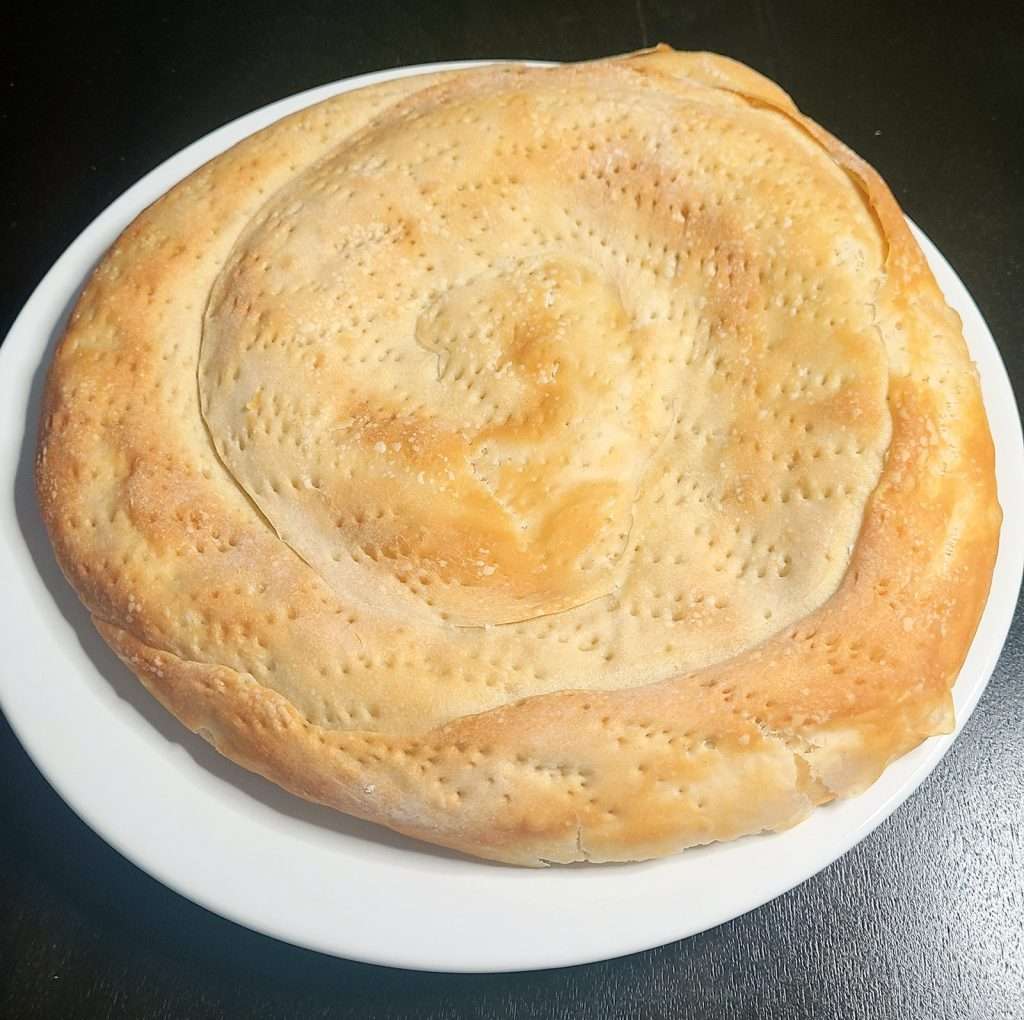
Fatir gets its flaky texture from the butter that is layered in the dough. I made this specifically to tear it up and make the next dish, qurutob!
I began by combining warm water with yeast. When it began to foam, I added flour and salt, and kneaded to form a dough. I let it rest for 10 minutes.
Next, I rolled the dough out until it was very thin, then brushed it with melted butter. I rolled the dough up until I had a long roll, then I rolled it into a spiral. I let the dough rest for another 10 minutes.
I flattened the dough on a baking sheet, then pricked it all over with a fork. I brushed the dough with cold water and baked it for about half an hour.
This was pretty good, especially when it first came out of the oven.
The recipe is from Nurbon Vlogs on YouTube.
Qurutob (Flatbread with Salad and Yogurt Sauce)
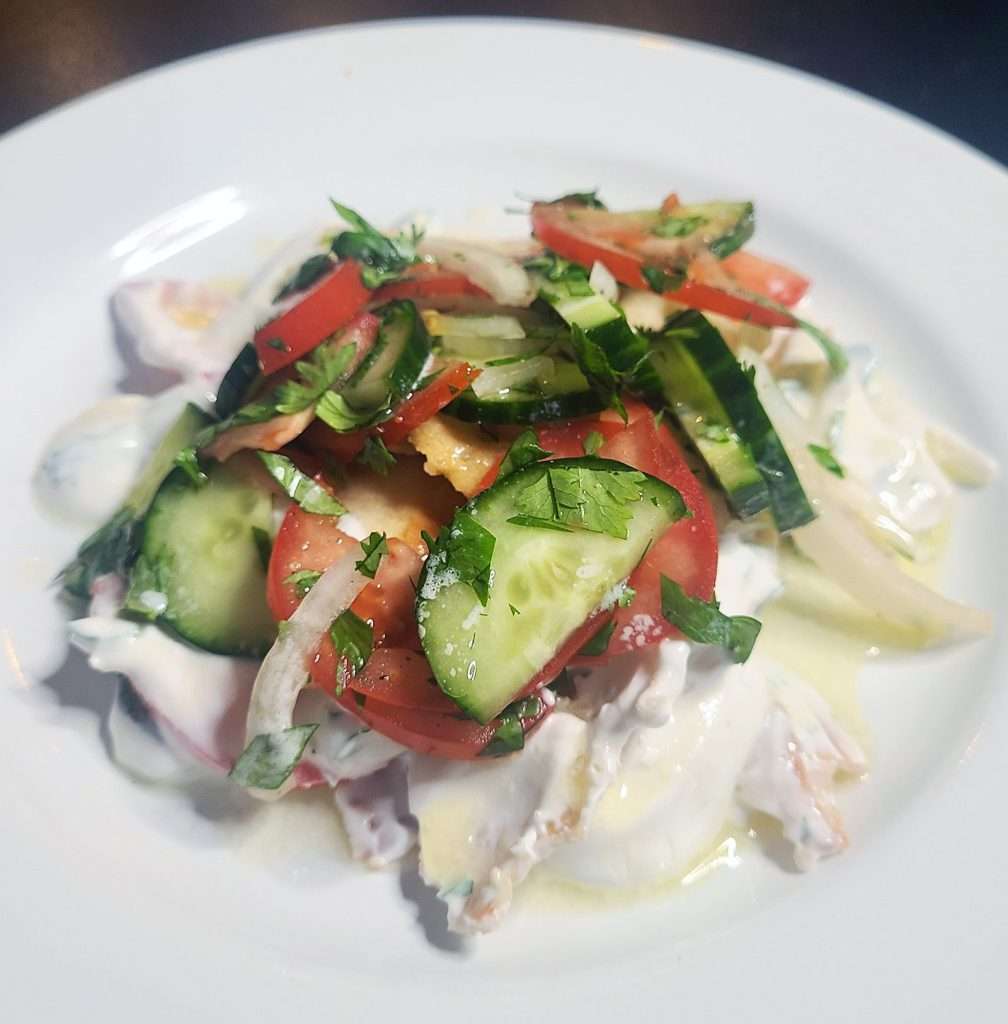
Qurutob is made from torn-up fatir, served with a yogurt sauce and salad on top. Meat is sometimes added. Some sources say that this is Tajikistan’s national dish, while some people from Tajikistan say they’ve never heard of it. It seems like it’s more popular in the south of the country.
I started by combining the salad ingredients: onion, cucumber, tomato, and cilantro. The recipe included a couple of whole chilies, but I left them out since I know I’m not going to actually eat a whole chili! I tossed the salad with some salt and pepper.
Next, I made the yogurt sauce. This would traditionally be made with qurut, which are dried, salted yogurt balls. They would be dissolved in warm water to make the sauce. The recipe I used called for yogurt instead. I used plain Greek yogurt and mixed it with salt and a little warm water to create a more liquid consistency.
I stirred some of the salad into the yogurt sauce, then tore up my fatir and added some of that too. I mixed until everything was well coated, and transferred this to a plate. I topped it with more torn-up fatir, then poured over some melted butter and finished with the rest of the salad.
I thought this was a really unique dish, and it tasted good too!
This recipe is from the same video as the fatir: Nurbon Vlogs on YouTube.
Kulcha (Rich Flatbread)
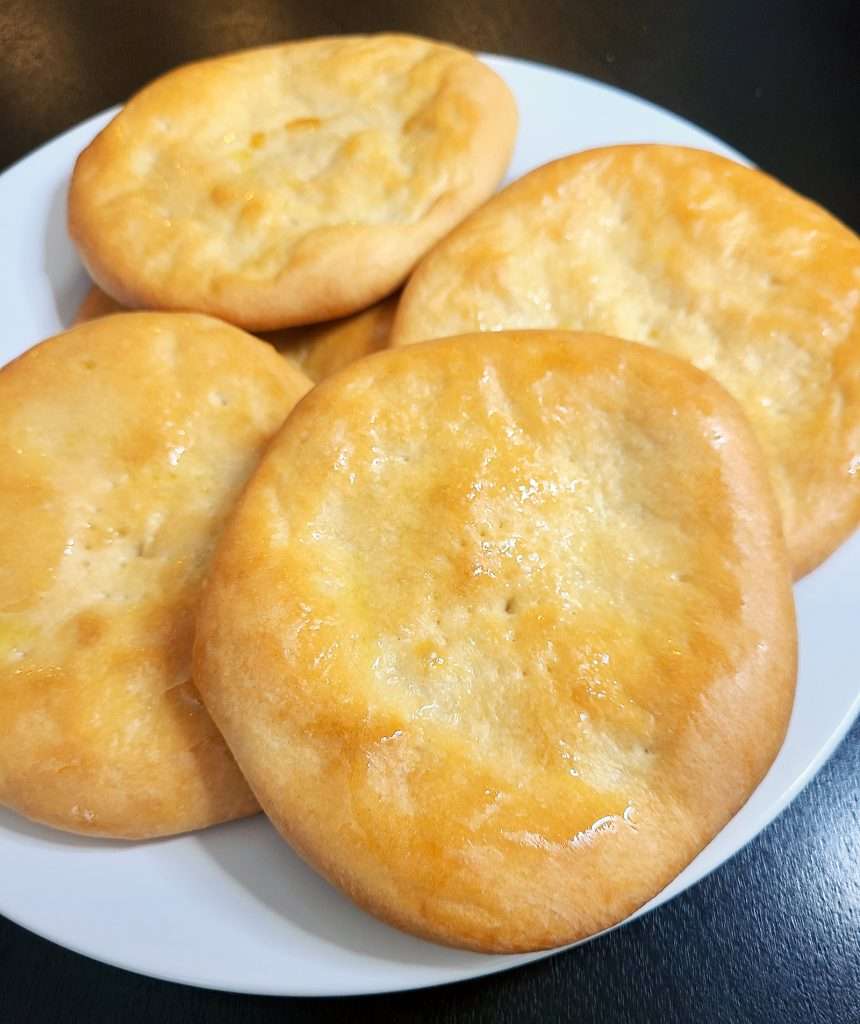
I had not originally planned on making these buttery flatbreads, but they were included in the video for the next recipe (shurba), and I decided they sounded good.
I began by combining warm milk with yeast. I let the mixture sit until the yeast was foamy. Then, I added melted butter, flour, and salt, and mixed until I had a dough. I kneaded until the dough was smooth, then let it rest for a bit over an hour.
I divided the dough into smaller pieces and rolled them into balls, then let them rest for about 10 minutes. After resting, I flattened them out a bit and let them rest for another 10 minutes.
I used a fork to attempt a design on the flatbreads, but it wasn’t very obvious after baking. I also made a hole in the middle of each one with a skewer. Then, I brushed them with milk and baked them for about half an hour.
When the kulcha came out of the oven, I brushed them with oil and let them cool a bit. They were pretty good, but I think I should have let them rest a bit more before baking.
The recipe is from Nurbon Vlogs on YouTube.
Shurba (Lamb and Vegetable Soup)
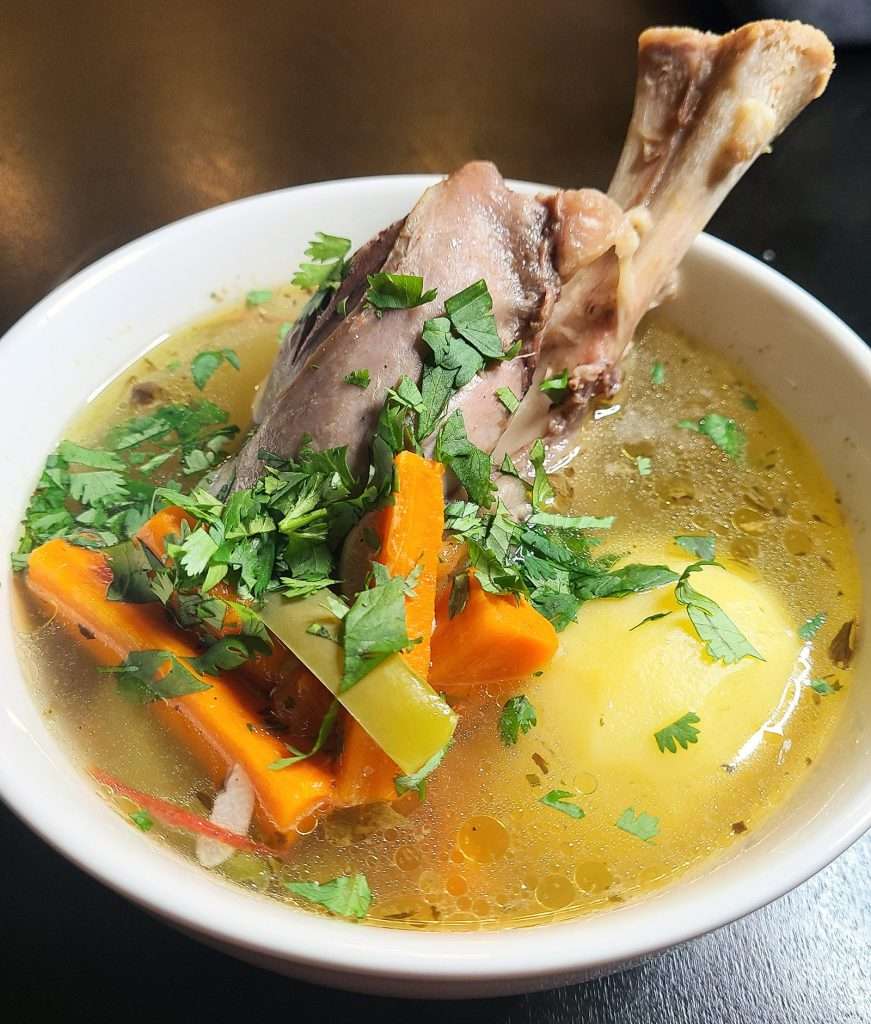
I love lamb, so I knew I wanted to try this lamb soup! The recipe I used called for lamb shanks, but I think you could use any kind of lamb, or even beef.
First, I boiled the lamb shanks briefly. I skimmed the scum off the top of the water, then added salt and left the lamb shanks simmering for another couple of hours.
Meanwhile, I cut up the vegetables and added them to the pot. This consisted of gold potatoes (peeled but left whole), carrots, green bell pepper, chilies, tomatoes, and garlic. I also added some chicken Better Than Bouillon, black pepper, and dried mint.
After another half hour or so of cooking, the soup was ready. This was pretty good, though I did end up cutting the potatoes since they were a bit unwieldy to eat. I also took all the meat off the lamb shanks and discarded the bones.
This recipe is from Nurbon Vlogs on YouTube.
Mastova (Rice and Beef Soup)
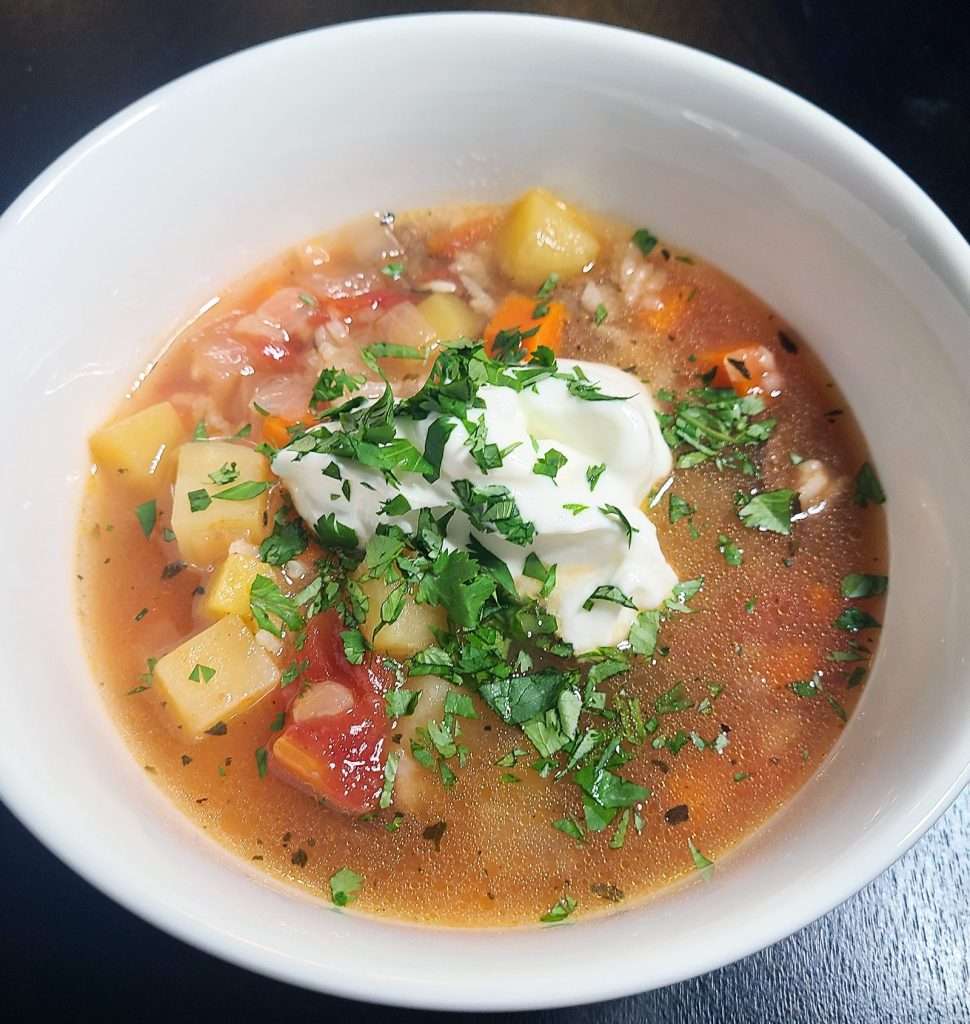
Mastova is a beef soup with rice and vegetables, usually served with yogurt on top. Honestly, the addition of the yogurt was what made this sound good to me!
I began by browning bite-sized pieces of beef chuck in oil. I added sliced onion, and after a few minutes, I added chopped carrot. A few minutes later, I added cubed potato and a can of diced tomatoes. I could have optionally included chickpeas here, but I chose not to. I added a bay leaf, salt, cumin, and tomato paste, and cooked for a few more minutes. Then, I poured in water and added dried basil (the recipe did specifically call for dried basil, which I hardly ever use).
I let the soup simmer until the beef was just about done, then added rice. When that was cooked, the soup was ready.
I served this with cilantro and plain Greek yogurt, and I thought it was excellent!
This recipe is from B’s Easy Recipes on YouTube.
Manti (Beef Dumplings)
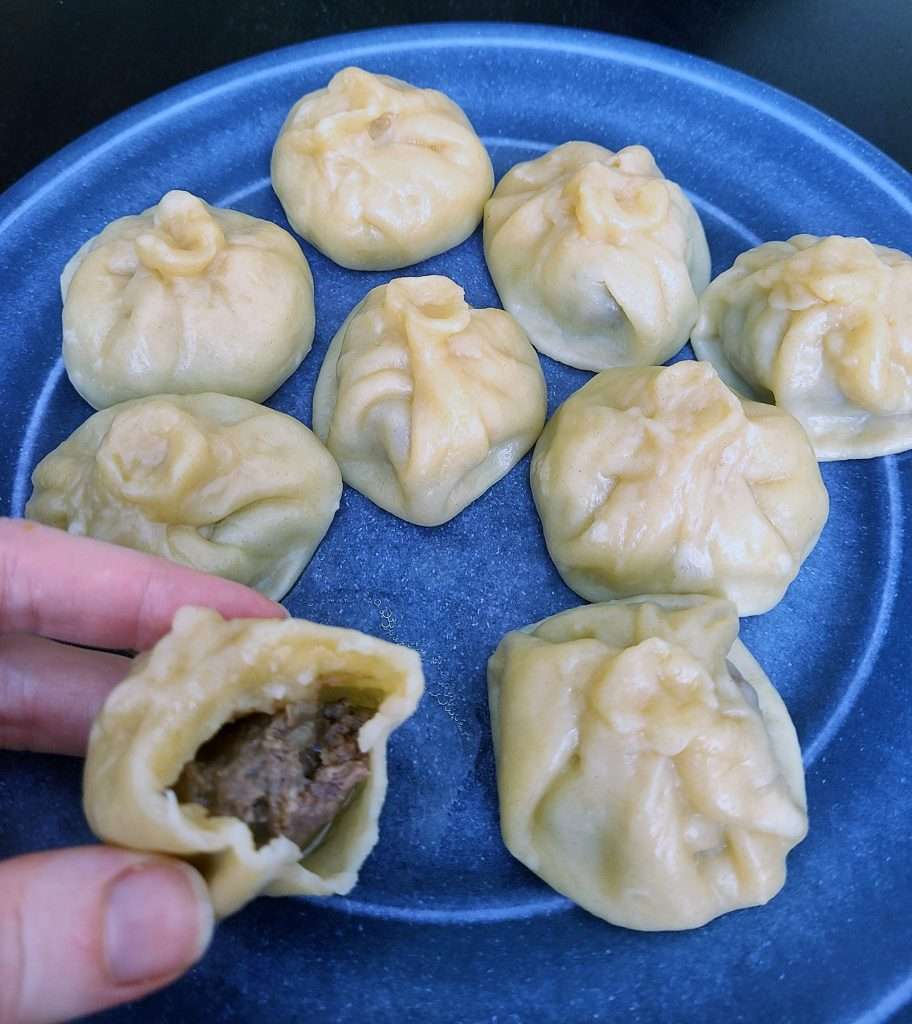
Manti are dumplings that come in many different forms across Central Asia. I made a version with lamb and pumpkin for Kazakhstan, but this time, I chose to make some cumin-flavored beef manti.
To make the dough, I combined cold water, flour, salt, and oil, and kneaded until it was smooth. I let the dough rest for about half an hour.
The recipe called for finely diced beef for the filling, but I cheated and used ground beef instead. I combined it with onion, salt, pepper, cumin, ground coriander, and a little oil.
I divided the dough into even pieces and rolled them into balls. Then, I rolled each ball out flat and added some of the filling. I tried to make a different shape than I have before and it only sort of worked. I was going for the shape in the recipe!
I steamed my manti in my bamboo steamer. I think I let them steam for around 20 minutes.
These were delicious! They froze well too, which is lucky since I froze most of my manti.
This recipe is from Sunday Spoon on YouTube.
Chagaldak (Fried Dough with Herbs)
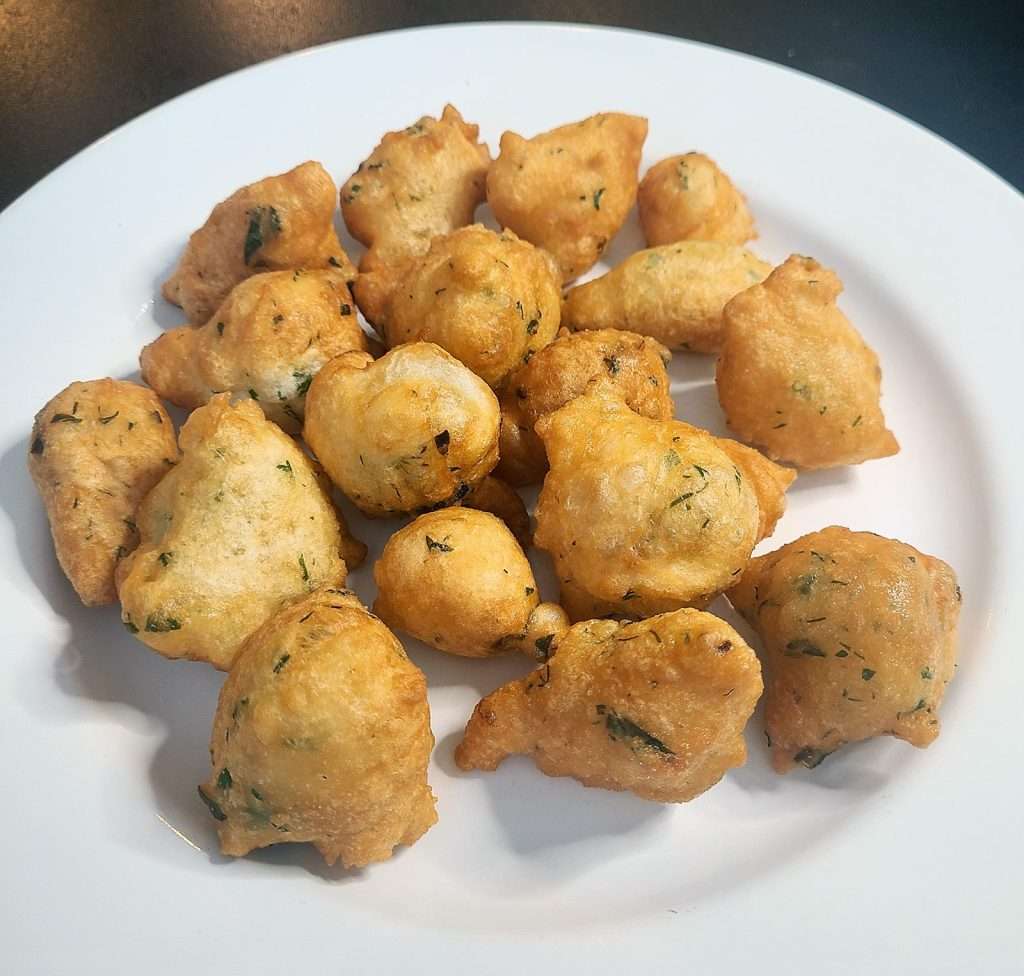
As you would know by now if you’ve been following me on this challenge for a while, many countries have their own fried dough dish. I thought this one seemed a bit different, since the dough is mixed with fresh herbs.
I began by combining warm water, milk, and yeast. I let this sit until foamy, then added flour and salt and mixed to form a wet dough. I covered the bowl and let it rest for a couple of hours.
Next, I added an egg, green onions, cilantro, dill, and cayenne pepper, and mixed until everything was well incorporated.
I deep-fried spoonfuls of the dough to make little fried dough balls. The dough was very sticky, so this was a messy process!
The end result was interesting. The dill had the strongest flavor, while I barely noticed the green onion, cilantro, or the cayenne. I might try this again, but with some flavor variations.
The recipe I used is from Mano Food.
Other Popular Tajik Dishes
- Khagina – beaten eggs cooked in oil or butter with onions and sometimes tomatoes.
- Laghman – hand-pulled wheat noodles in a beef or lamb broth.
- Sambusa – triangular baked pastry filled with seasoned meat or vegetables.
Final Thoughts
This was a great week! Everything was pretty good, but my favorite dish might be the plov. I think this was my favorite plov iteration yet!
Next time, I will be cooking food from Tanzania.