
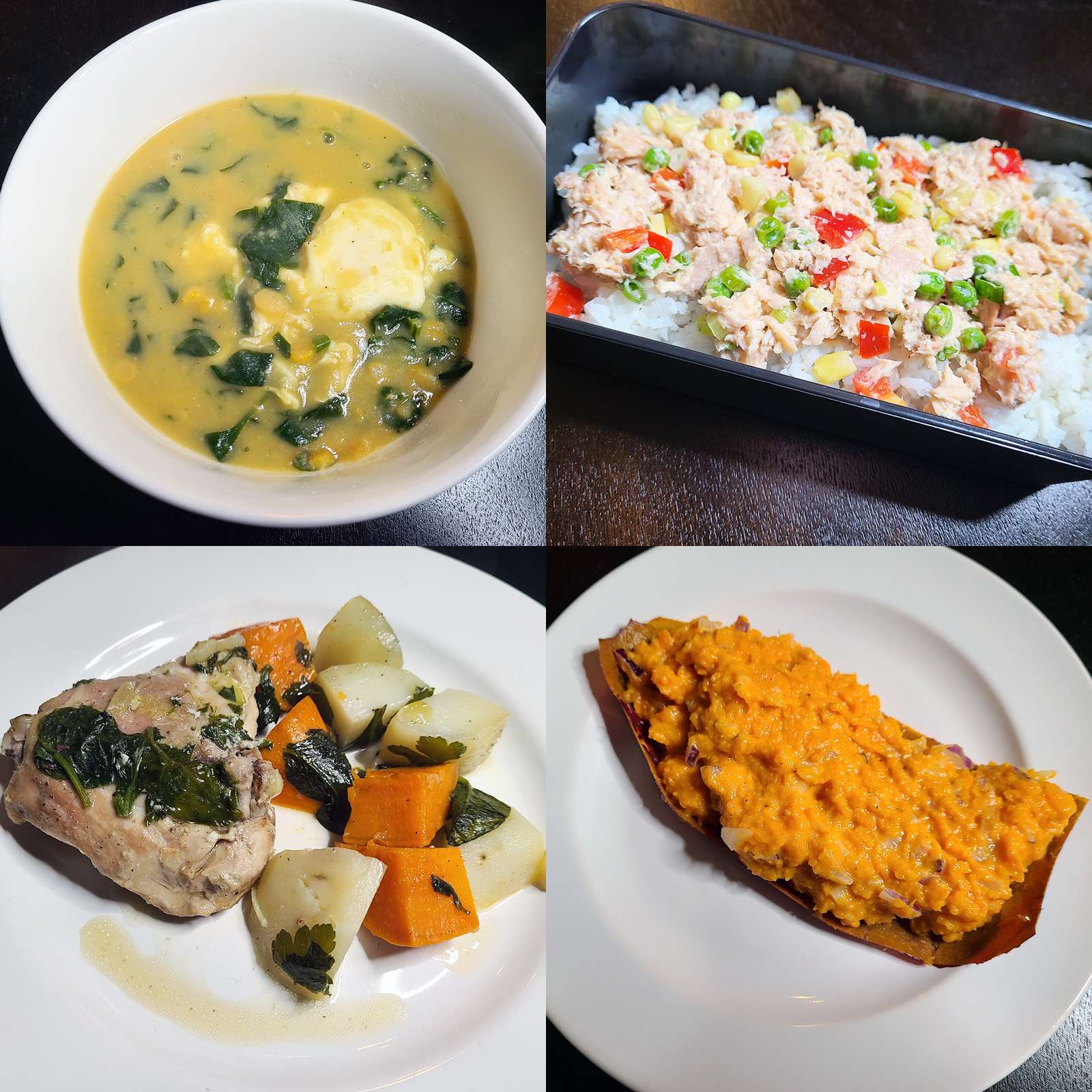
This was a tough week; even the people from Papua New Guinea who responded to my Reddit post said that their cuisine was based on sustenance and wasn’t particularly interesting. They did say they enjoyed the flavors anyway. However, I managed to end up with some food from Papua New Guinea to try which I at least found interesting in some way.
Papua New Guinea takes up the eastern half of the island of New Guinea in Oceania (Indonesia has the other half). It also includes some offshore islands.
There is evidence to suggest that humans first arrived on the islands around 42,500 to 45,000 years ago, and that they were descendants of African migrants.
During the 1880s, the area was split between German and British rule. After World War I, all of present-day Papua New Guinea came under Australian control. In 1975, Papua New Guinea became an independent Commonwealth realm under the British monarchy.
The country hosts a diverse range of plants and animals, many of which are thought to still be undocumented. It’s also home to many different cultures and is the most linguistically diverse country in the world, with over 840 known languages.
What Do People Eat in Papua New Guinea?
Papua New Guinean cuisine is still largely based on traditional ingredients such as coconut, bananas, sago (which comes from palm trees and can be made into flour), and root vegetables such as taro. Sweet potatoes were introduced during the 18th century and quickly became popular.
Vegetarian dishes are common in Papua New Guinea, and seafood is also widely consumed. Meat is not as popular, though pork and chicken can be found in some dishes. Pork in particular is considered a celebratory meat.
Popular drinks are beer, tea (introduced by the British), kulau (water from a green coconut), and coffee, which is the country’s second-largest agricultural export after oil palm.
What I Made
- Mumu (Roasted Chicken and Vegetables)
- Kol Pis No Rais (Cold Tuna and Rice)
- Kaukau (Mashed Sweet Potato)
- Bugandi Egg Drop Soup (Split Pea Soup with Poached Egg)
Scroll down to read about other popular Papua New Guinean dishes I didn’t make!
Mumu (Roasted Chicken and Vegetables)
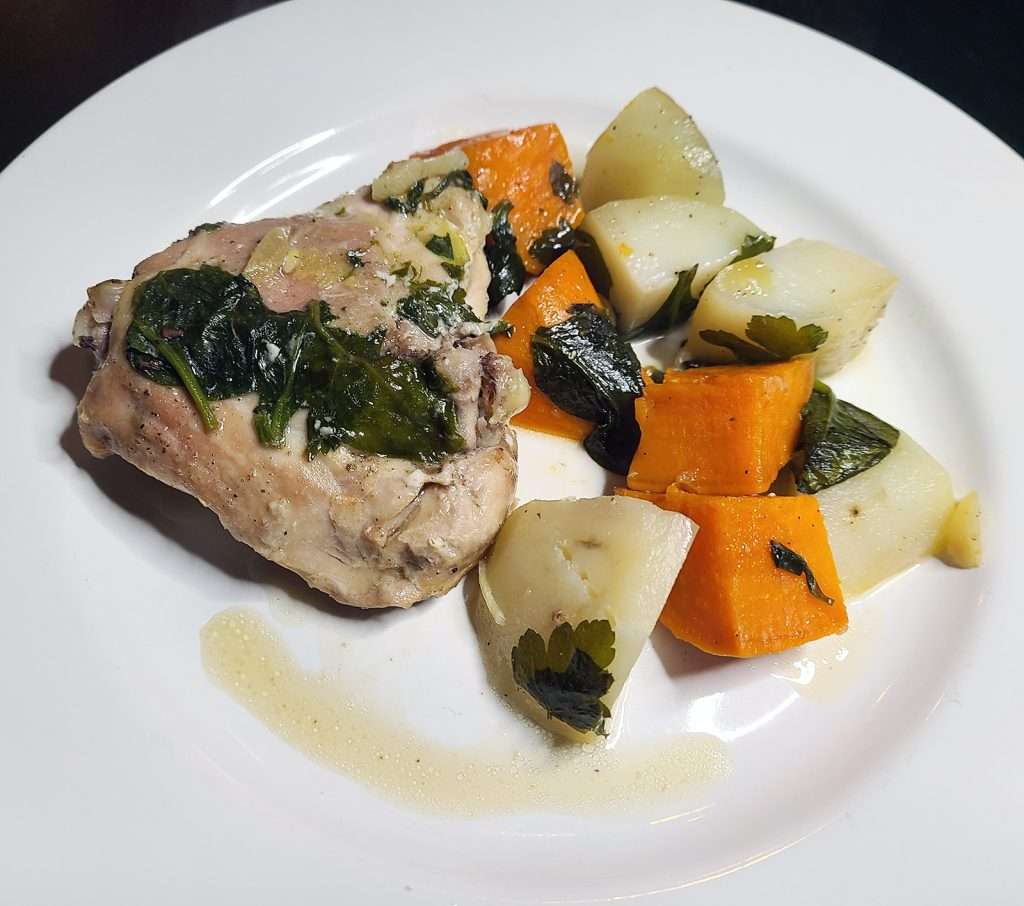
Mumu is traditionally cooked in an earth oven filled with hot stones. Pork, chicken, and various vegetables are wrapped in banana leaves and buried among the hot stones until done. Since I don’t have an earth oven, I used a regular oven instead and wrapped the ingredients in foil instead of in banana leaves. I consider this a rather loose interpretation of the dish.
I wrapped chicken thighs in one foil parcel and a combination of sweet potato and regular potato in another. I added spinach, parsley, salt, pepper, garlic, and coconut milk to each parcel. The recipe called for ‘seasonal market greens’ and ‘seasonal herbs’ so spinach and parsley are what I went with.
Next all I had to do was roast everything in the oven until done. I gave the chicken a head start so that it was falling off the bone by the time the vegetables were tender.
This turned out better than I’d expected; I found the chicken and vegetables to be very flavorful despite the simple seasoning.
I only loosely followed a recipe for this one; the recipe also called for a whole suckling pig and the vegetables used were plantain, sweet potatoes, and taro. You can find the recipe at SBS Food.
Kol Pis No Rais (Cold Tuna and Rice)

This quick meal consists of cold fish, rice, and usually some vegetables. The fish of choice is often canned tuna. I found it difficult to find more detail than that; some images showed whole pieces of cooked fish alongside rice whereas others showed a mixture of fish, rice, and vegetables. I couldn’t find a recipe either; for some reason there were a lot of spammy YouTube links showing up that were titled Kol Pis No Rais but linked to the same useless 24-second video. So I decided to improvise!
First, I cooked the rice in my rice cooker with a little coconut milk mixed into the water, and let it cool.
Then I made a tuna salad with canned tuna, peas, corn, green onion, and red bell pepper—basically just the vegetables I had lying around. I added Greek yogurt, mayonnaise, salt, and pepper, and served the tuna on top of the rice.
I took this to work for lunch and ate it completely cold. I have to say, I was pleasantly surprised at how good this was! I wasn’t sure if I’d like the rice cold, or if I should have heated it separately and then had the cold tuna alongside. But it worked out pretty well this way.
Kaukau (Mashed Sweet Potato)
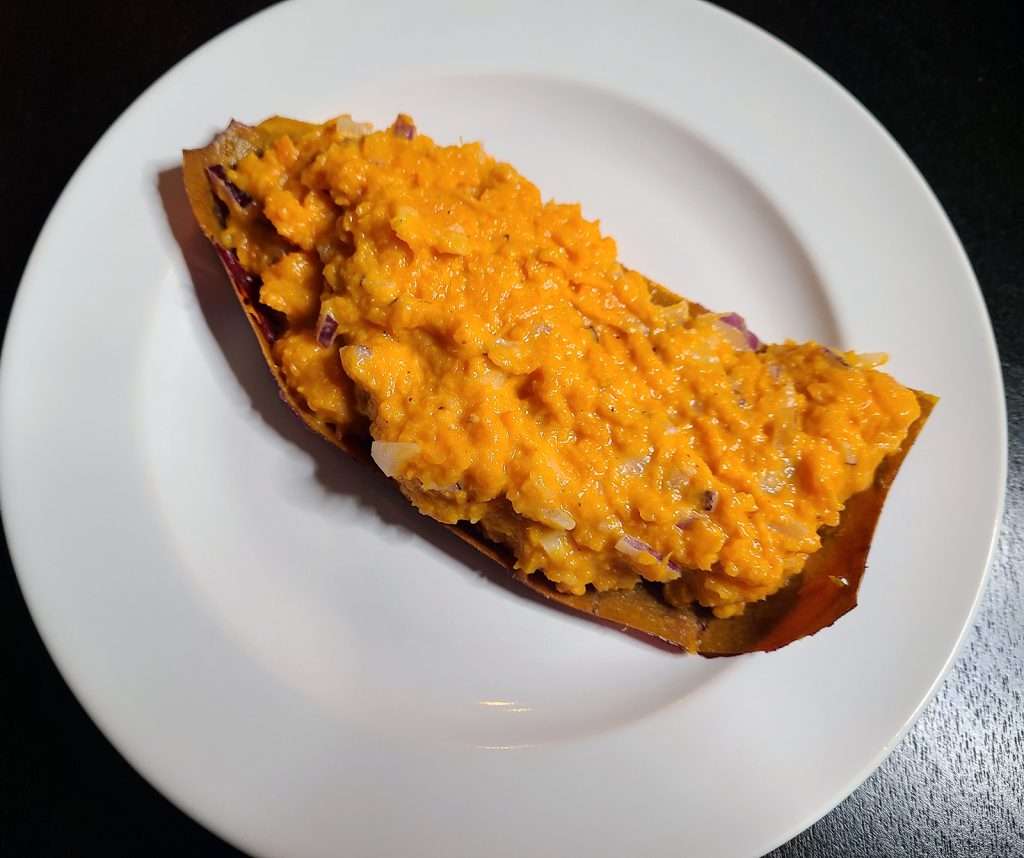
Mashed sweet potato isn’t unique to Papua New Guinea, but they do try to make it their own by adding ingredients such as coconut, garlic, and ginger, and by serving it in sweet potato skins.
I wrapped the sweet potatoes in foil and baked them in the oven until tender. Then I cut them in half and scooped out the flesh. I meant to leave a little on the skin so that it would keep its shape but the skin really wanted to just detach completely from the flesh. So that’s why the shape isn’t very good!
I mashed the sweet potato with butter, coconut milk, onion, garlic, ginger, shredded coconut, orange juice, salt, and pepper. Then I put it back in the potato skins (more like, I just plopped it onto the skins).
I thought this tasted pretty good; it was an interesting combination of flavors. I’d probably make this again but I wouldn’t bother trying to put the mixture back in the skins.
The recipe I used is from 196 Flavors.
Bugandi Egg Drop Soup (Split Pea Soup with Poached Egg)

I saw a few different recipes for this—some that were based solely on vegetables and others with some kind of split pea or lentil. Some recipes had you beat the egg and drizzle it into the soup, like Chinese egg drop soup, while others had you drop in a whole egg and poach it. I don’t know what the most authentic version is, but I followed a recipe that included mung beans (which I substituted with a mixture of split pigeon peas and split chickpeas) and a poached egg.
I started by sautéing some onions in a little oil. Then I poured in chicken stock and added split pigeon peas and split chickpeas. I let them cook until soft, then used an immersion blender to partially blend the soup. I did this since it sounded like the mung beans cook down more than the legumes I was using. Then I added some spinach and seasoned the soup with salt and pepper. I dropped in some eggs and once they were done poaching, I served the soup.
I really enjoyed this, and it was so simple to make that I will probably make it again. Next time, I would like to try with mung beans as intended.
The recipe I used is in French but translates well in Google Chrome; it is from La Tendresse en Cuisine.
Other Popular Papua New Guinean Dishes
- Saksak – steamed or boiled dumplings made from tapioca and bananas, wrapped in banana leaves and finished in coconut milk. Some sources say ‘saksak’ actually refers to the tapioca flour; maybe this dish got its name since it’s so popular to make with it.
- Kaima bona gatoi – grilled vegetable dish that typically includes eggplant, zucchini, onions, and peppers.
Final Thoughts
This week went better than I’d initially expected! The food from Papua New Guinea was all good, but my favorite dish was the bugandi egg drop soup.
Next week, I will be cooking food from Paraguay.