
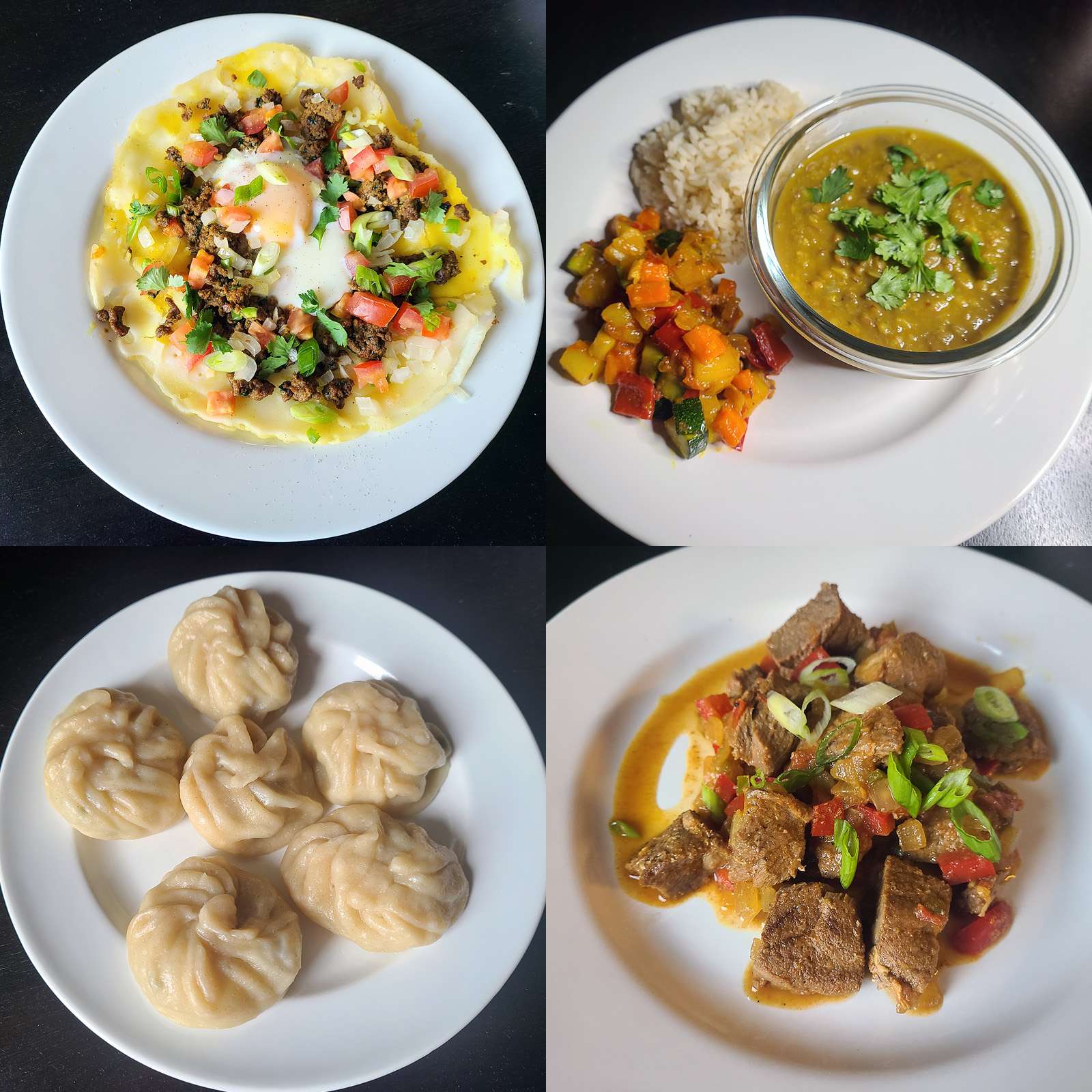
I had some idea of what food from Nepal might be like because when I cooked food from Bhutan, I found out that Nepali cuisine has some similarities. Both countries enjoy delicious dumplings called ‘momos’, as well as spicy food. I didn’t receive help from any Nepali Redditors since my Reddit post was ‘removed by Reddit’s filters’ for some reason, so I had to make do with my own research.
Nepal is mainly located in the Himalayas in South Asia and has eight of the world’s ten tallest mountains, including Mount Everest. Hinduism is the predominant religion, but Nepal is actually the birth country of the founder of Buddhism, Gautama Buddha.
The region has been inhabited for at least 55,000 years, with some of the earliest people belonging to the Indus Valley Civilization, the first urban culture in South Asia. It wasn’t until the 18th century that the people of the area were unified to create Nepal. The country was established as a kingdom and allied with the British Empire. Unlike many other countries I’ve explored throughout this challenge, Nepal was never colonized.
Despite attempts at democracy, Nepal remained a monarchy until after the Nepalese Civil War which took place during the 1900s and 2000s. It resulted in Nepal becoming a secular republic in 2008, also ending the world’s last Hindu monarchy.
What Do People Eat in Nepal?
Nepali cuisine varies greatly depending on location and the culture of the area—it’s a very multicultural country so there are many different influences. Some common features include lots of spices, curries, and a variety of delicious vegetarian dishes.
Rice is one of the most common side dishes, though in some regions it does not grow well so wheat, maize, buckwheat, barley, or millet may be used more often.
Vegetables are plentiful in Nepali dishes; they may be served with dal (stewed lentils) or other legumes to make a vegetarian dish, but they can also be combined with meat. It’s common to pickle vegetables and serve them as side dishes.
Chicken is one of the more popular meats; lamb is also used often. Beef is not so common because observant Hindus do not generally eat it; they also often won’t eat buffalo or yak because they think those animals are too similar to cows. However, these meats are used by others in the country and buffalo in particular came up a lot during my research.
Sweets in Nepal are often eaten for breakfast as meals rather than as a dessert. They are often made from dairy products and seasoned with dried fruit, nuts, and aromatic spices.
What I Made
- Chatamari (Rice Flour Crepe with Meat, Veggies, and Egg)
- Momos (Dumplings)
- Gorkhali Lamb (Lamb Curry)
- Dal Bhat (Curried Lentils with Rice)
- Choila (Spicy Chicken Salad)
- Chukani (Spicy Potato Salad)
Scroll down to read about other popular Nepali dishes I didn’t make!
Chatamari (Rice Flour Crepe with Meat, Veggies, and Egg)

Sometimes referred to as ‘Newari pizza’, chatamari is a traditional food popular among the Newari people of Nepal. It consists of a crepe or pancake made from rice flour with various toppings. Meat of some kind (buffalo is popular in Nepal) and an egg are common.
I started by cooking my ground beef—the recipe says to top the pancake with raw meat but I wasn’t convinced it would cook properly. I seasoned it with coriander, cumin, turmeric, paprika, curry powder, garlic, ginger, cilantro, and salt.
Next I whisked together rice flour and water to make the crepe batter. I added some oil to my skillet, then added a ladle of batter and let it spread to the edges.
After the pancake had been cooking for a few seconds, I added my toppings: the ground beef mixture, onion, tomato, and chili. The recipe also called for peas but I omitted them. I cracked an egg on top of everything, then covered the pan and let it cook until the egg was cooked to my liking.
I managed to slide my chatamari out of the pan in one piece. Then I topped it with green onion and cilantro before serving.
This tasted pretty good; I really liked the seasoning on the meat. I’d like to try these toppings on an actual pizza some time!
This recipe is from Newari Recipes Hut.
Momos (Dumplings)
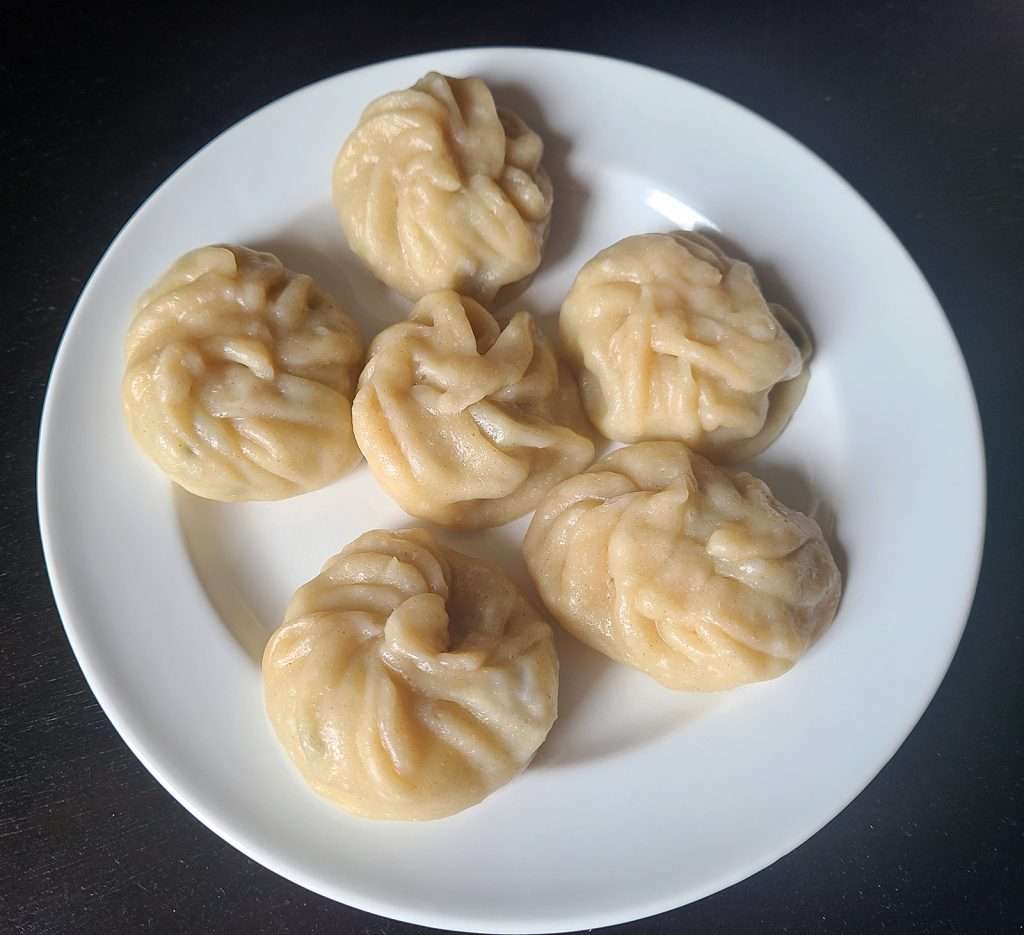
It turns out dumplings are popular in many countries. These Nepali dumplings are called ‘momos’, and they can be filled with either meat or vegetables. The recipe I followed included a chicken filling.
I started by making the dough out of flour and water. I let it rest while I prepared the filling.
I ground up some chicken thighs in my food processor and added cilantro, onion, garlic, ginger, cumin, cinnamon, salt, and pepper. I used less salt than the recipe called for since it seemed like too much, and I was right—I’m glad I made this decision!
I divided the dough into small pieces and filled them with the chicken mixture, then added the dumplings to my steamer and steamed them until they were done.
These were great! Momos are usually served with some kind of sauce, often a tomato-based sauce like what I made for my Bhutanese momos. I ate some of these plain and some with a little soy sauce; both were delicious.
The recipe I used is from the Food Network.
Gorkhali Lamb (Lamb Curry)

This lamb curry is prepared in what to me is an unusual manner—the lamb is grilled before being finished in the curry. It’s typically served with rice and/or roti.
I made a marinade by blending roasted tomatoes, roasted red bell pepper, onion, lemon juice, cumin, pepper, Szechuan pepper, celery, mustard oil, and soy sauce. Then I slathered the mixture over a bone-in lamb leg steak and let it sit in the fridge all day.
I pan-fried the lamb since I don’t have a grill, and let it rest. I cut it into cubes and then it was ready for the curry.
For the curry, I started by briefly cooking fenugreek, bay leaves, and whole dried chilies in mustard oil. I added ground turmeric, followed quickly by onions. I sautéed them for a few minutes, then added garlic, ginger, fresh chili, cumin, coriander, pepper, and salt. After another 30 seconds or so, I added chopped tomatoes and red bell pepper, as well as some chicken broth. It was meant to be lamb broth, but I don’t think I’ve ever seen that at my supermarket and I didn’t want to put the time into making it from scratch.
I simmered the curry for 10 minutes or so, then added the lamb and cooked for a few minutes more. My sauce didn’t really thicken but there was no thickening agent so I didn’t expect it to; it does look thicker in the recipe photo though.
I served my curry with a tortilla on the side in place of roti since I wasn’t hungry enough to make rice that night, and I garnished it with green onions. It tasted alright but I think that, despite the marinade, the lamb didn’t have as much flavor as it would have had it been cooked slowly in the curry.
This recipe comes from Nepal Recipe.
Dal Bhat (Curried Lentils with Rice)
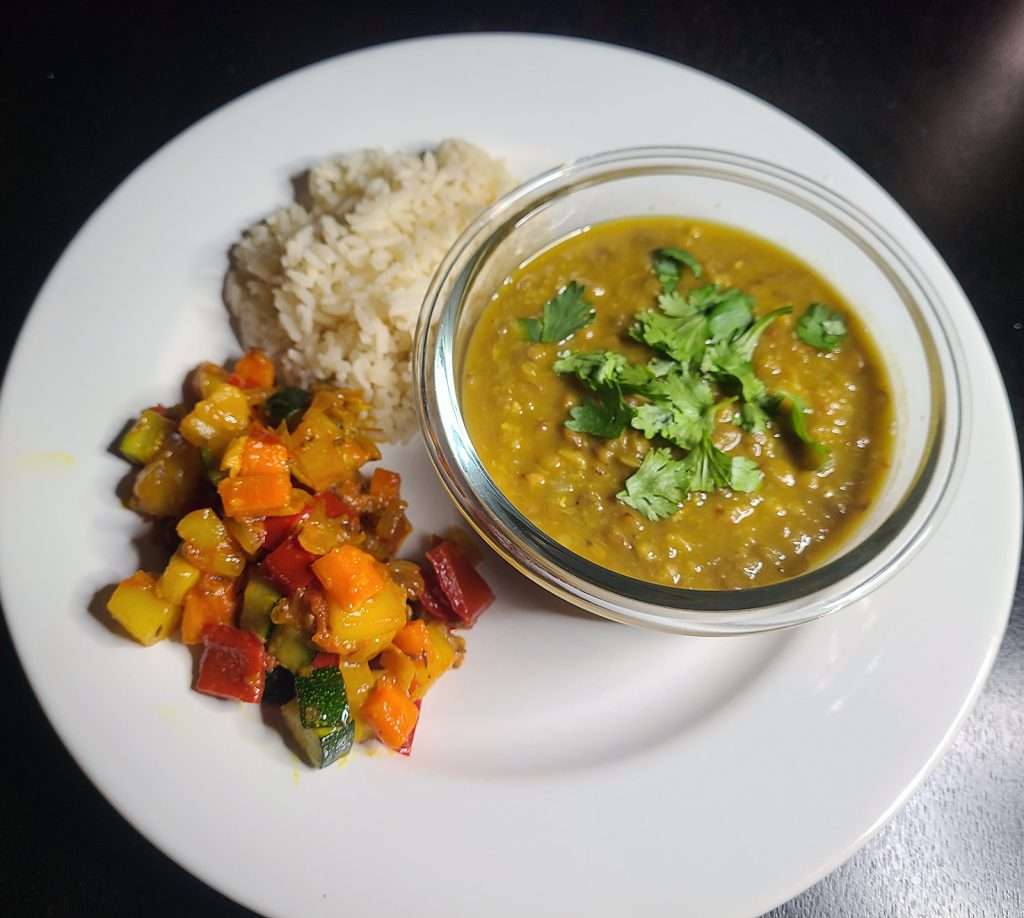
Dal bhat is a popular lentil stew served with rice and a variety of other side dishes, such as pickled or stir-fried vegetables, sauces, or curries.
I rinsed my lentils (a mixture of brown, yellow, and red) and soaked them for about 20 minutes or so while I prepared the other ingredients.
I sautéed some onion in ghee, then added garlic and ginger, followed by diced tomatoes, ground turmeric, coriander, and salt. After a few more minutes, I added the lentils, then water.
While the lentils cooked, I made some rice using my rice cooker and sautéed some vegetables. I used a mix of carrot, zucchini, potato, red bell pepper, onion, and tomato. For the seasoning, I used garlic, ginger, cumin seeds, ground turmeric, and salt.
I served the dal bhat with a garnish of cilantro, alongside some rice and vegetables. This made for a delicious and filling meal; I’ll most likely make it again.
I used two recipes from Nirmala’s Delight for this: here is the dal baat and here is the recipe for the sautéed vegetables.
Choila (Spicy Chicken Salad)
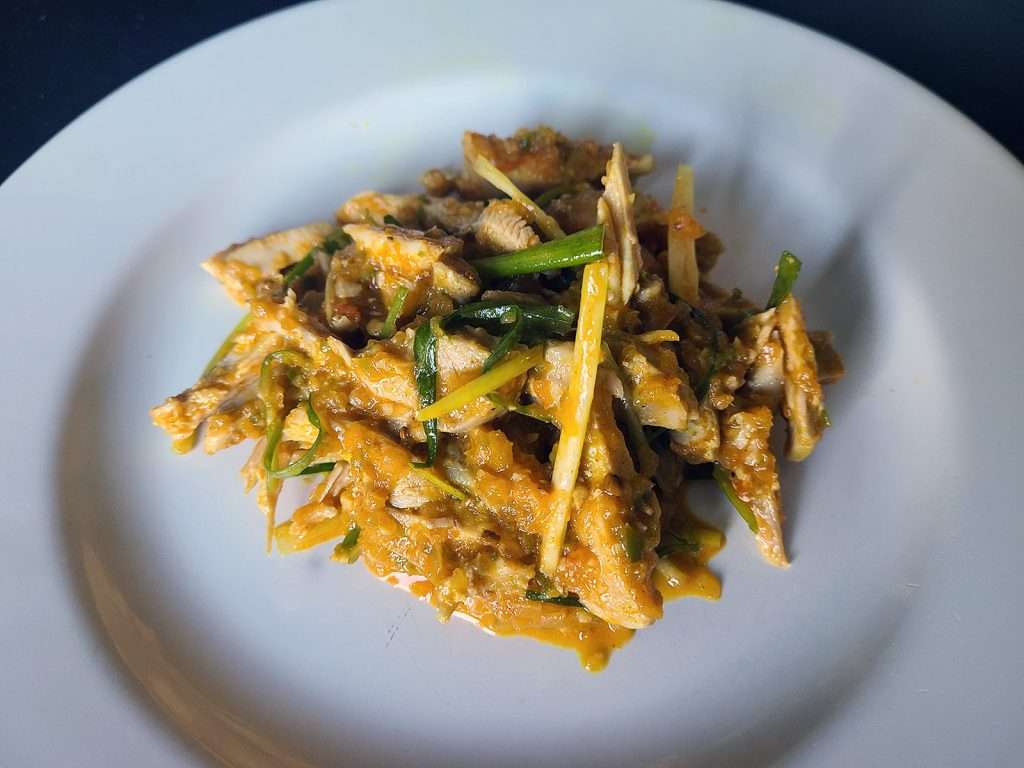
This traditional Nepali salad is often served as an appetizer and enjoyed cold with an alcoholic beverage.
First, I seasoned some boneless chicken thighs with salt and pepper and pan-fried them until cooked through. Once the chicken cooled a bit, I sliced it into strips.
Next, I cooked some ginger and chilies in oil. After a minute or so, I added onion, garlic, and tomato, and cooked for just a couple of minutes or so since the recipe said not to cook them too much. I let the mixture cool a bit, then blended it to make a paste.
I combined the chicken, spice paste, coriander, paprika, lemon juice, ground Szechuan pepper, and salt in a bowl. I also added some green onions, which I’d sliced into strips.
I made the tempered oil dressing next, starting by heating oil in a saucepan. I added fenugreek seeds and cooked for just a few seconds, then stirred in some ground turmeric and took the saucepan off the heat. I poured the dressing over the other ingredients and mixed them all together.
Although the recipe said to serve this dish cold, I ate it warm initially and only had it cold as leftovers the next day. I think it was delicious both ways. I do think I’d prefer it without the fenugreek seeds though; the flavor was fine but biting into the seeds was a bit weird. However, I don’t have that problem when I eat them in curry.
The recipe I used here is from Juni Foods.
Chukani (Spicy Potato Salad)
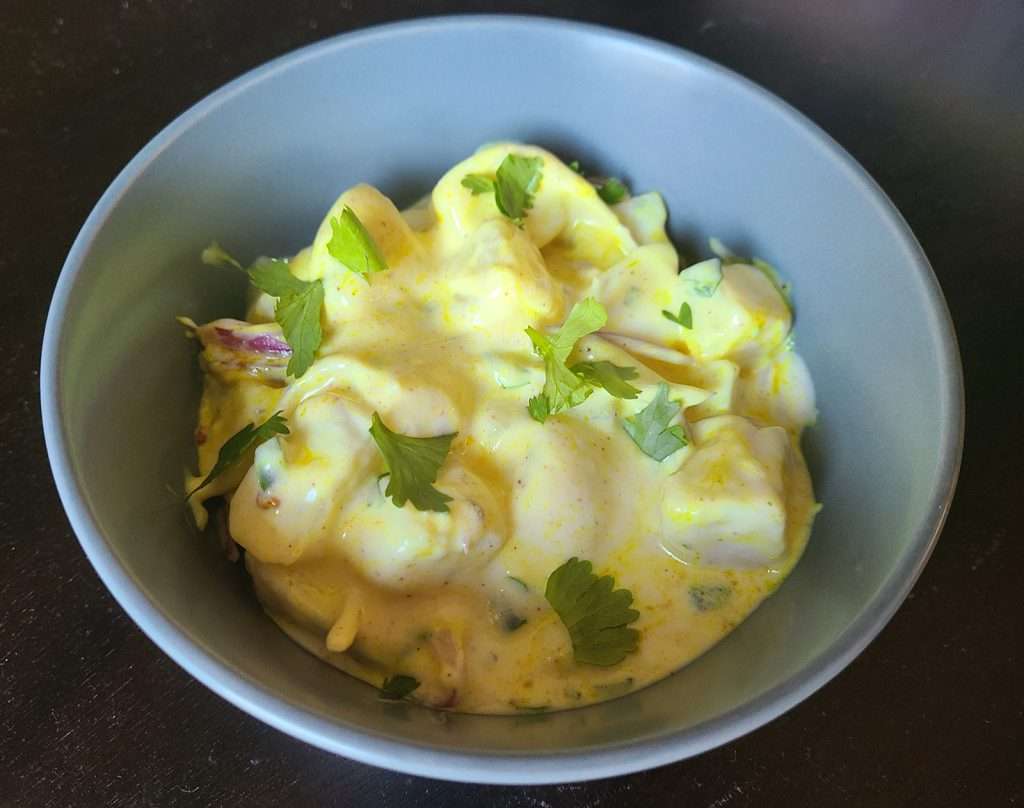
This is like a soupy, spicy version of potato salad. I love new ways to enjoy potatoes so I thought I would give this a try.
First, I chopped up some russet potatoes and got them boiling. Then I whisked Greek yogurt with some water to make it looser, more like regular yogurt. This wasn’t part of the recipe, but I only had Greek yogurt so this was my substitute.
Once the potatoes were ready, I let them cool a bit. Then I added them to the yogurt with salt, cayenne pepper, red onion, chilies, and cilantro.
I also made tempered oil for this recipe: just like for the choila, I briefly cooked some fenugreek seeds in oil, then added turmeric and poured the mixture over the potatoes. I tried not to let too many of the seeds get in this time.
I really enjoyed this dish; it was quite spicy even with the yogurt to help cool things down.
The recipe for this is from Garima’s Veg Kitchen on YouTube.
Other Popular Nepali Dishes
- Samay baji – a platter comprising many items: flattened rice, fried black soybeans, lentil pancakes, rice pancakes, buffalo meat, finger, fried boiled egg, fried fish, pickled boiled beans, spicy potato salad, greens, and Newar wine.
- Gundruk – made by fermenting leafy greens such as mustard greens, radish leaves, and cauliflower leaves. It’s served as an appetizer or side dish.
Final Thoughts
This was another great week. I enjoyed the dal bhat the most but everything was good.
Next week, I will be cooking food from the Netherlands.