
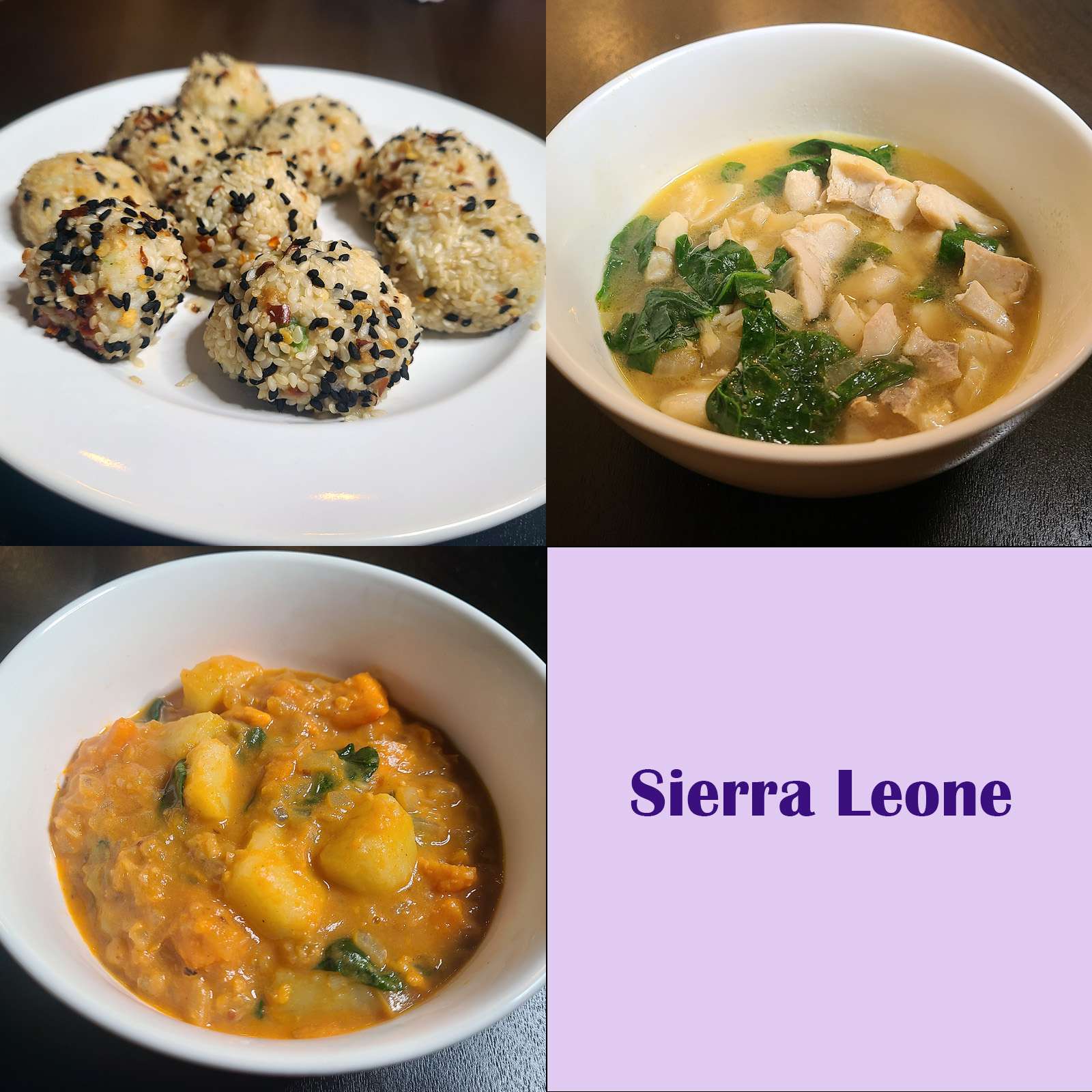
I cooked food from Sierra Leone this week, the second African country in a row, though this one is very different from Seychelles. The food was very simple, but sometimes that’s a good thing!
Sierra Leone is located on the coast of West Africa, bordered by Liberia and Guinea.
The region has been continuously inhabited by humans for at least 2,500 years. The area resisted invasions by other African empires due to natural defenses, including difficult terrain and a horse-killing disease carried by the tsetse fly.
In the 15th century, Sierra Leone experienced its first interaction with Europeans when a Portuguese explorer mapped the region. He named the land ‘Serra Leoa’, which is Portuguese for ‘lioness mountains’, referring to the Lion Mountains near the country’s capital. Over time, the name evolved to become ‘Sierra Leone’.
Traders from various European countries began to set up trading stations, primarily dealing in slaves brought from the interior of the continent. The Europeans would pay local kings for rent, tribute, and trading rights.
In 1808, the British Empire founded a colony in Sierra Leone as a place to resettle Africans after slavery was abolished. Then, in 1961, Sierra Leone became an independent country.
Sierra Leone was introduced to Islam around the 18th century, and today, around three-quarters of the country is Muslim, with the second most prominent religion being Christianity. However, religious tolerance is high, and the country is run as a secular state.
The country is rich in natural resources such as diamonds, gold, bauxite, and aluminium. However, much of the population either lives in poverty or is vulnerable to it.
What Do People Eat in Sierra Leone?
Rice is the most commonly eaten food in Sierra Leone, and it is typically a part of every meal. Cassava is another staple.
Common meats include goat, chicken, and beef, and pork even features in some dishes. Fish is also quite common, as are vegetarian proteins such as black-eyed peas.
Some of the popular seasonings include ginger, tamarind, cinnamon, and palm oil. Peanuts are also heavily featured in many dishes.
A wide range of tropical fruits is available, including bananas, papayas, mangoes, and pineapples.
What I Made
Scroll down to read about other popular Sierra Leonean dishes I didn’t make!
Spinach Plasas (Spinach Stew with Fish)
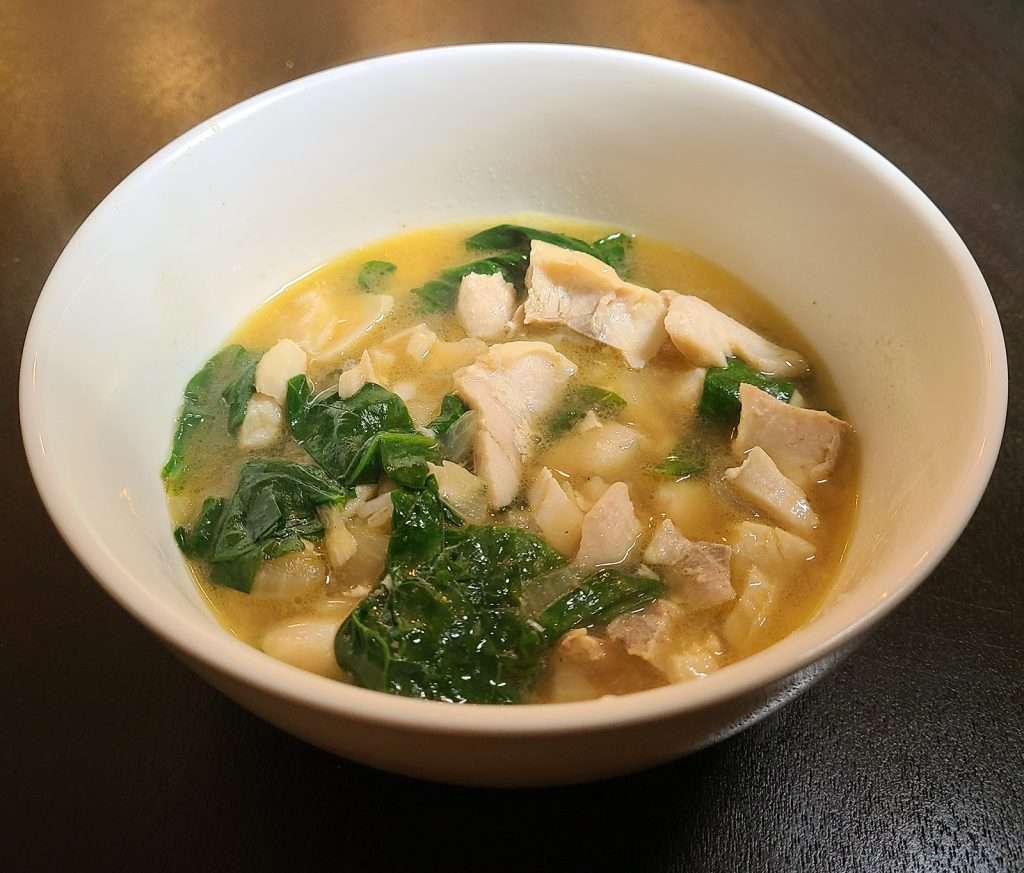
Plasas is a very common dish in Sierra Leone, and it can be made with just about any kind of leafy green vegetable that’s available. Cassava or potato leaves are popular choices in Sierra Leone, but I used spinach since that was easier for me to obtain. Fish or meat can be added, and the seasonings often include onion, peanuts, and chilies.
I began by sautéing some chopped onion in a little oil. Palm oil would usually be used but I didn’t buy any more after using it all for this challenge, so I used peanut oil instead. I added cayenne pepper and salt, then poured in water and added a cod fillet. Once the fish was cooked through, I added the spinach and a little peanut butter.
I served this over rice. It was a simple dish, but it did taste quite good.
I loosely followed the recipe from The Sierra Leone Web for this, though I omitted the beef.
Fish Huntu (Steamed Fish Balls)
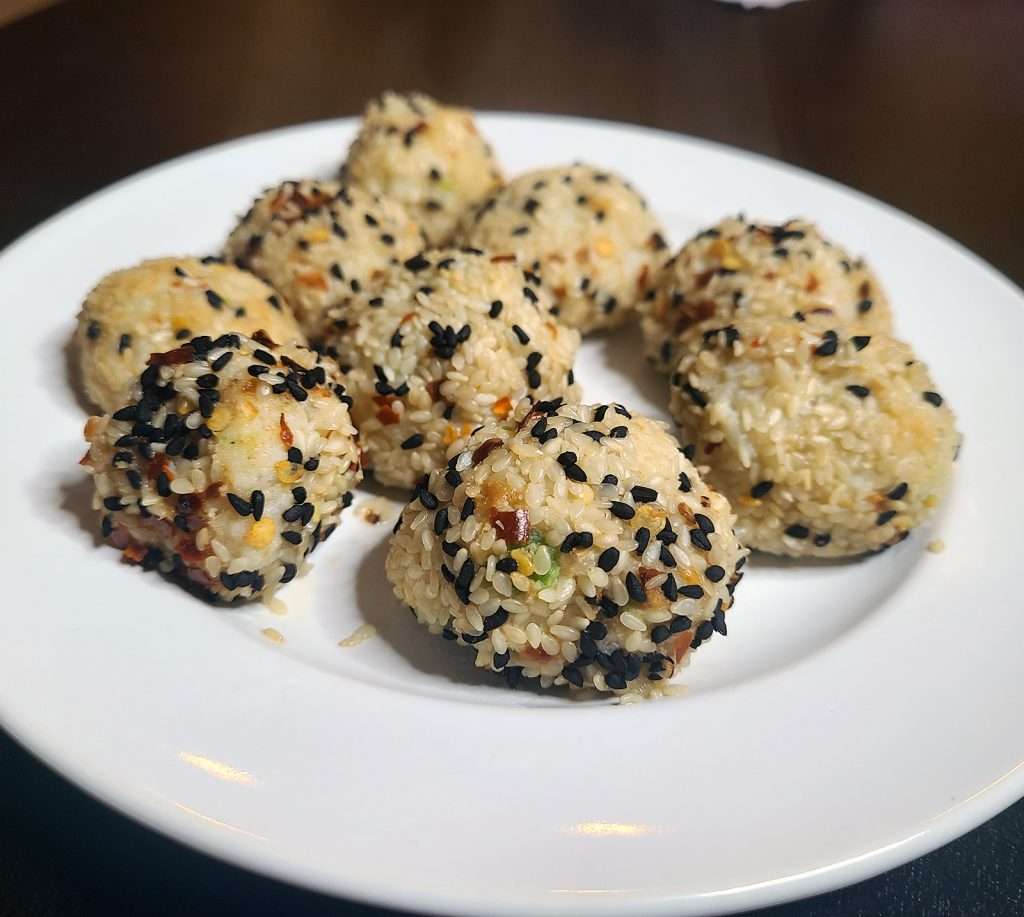
These fish balls are made from white fish and seasoned with onion, garlic, ginger, and chili. I thought they looked pretty simple and fairly healthy so I wanted to try them.
I added the fish (I used rockfish) to my food processor with ginger, garlic, onion, chili, semolina, salt, pepper, MSG, and sunflower oil, and blended until smooth. I transferred the mixture to a bowl and let it chill for about half an hour, which I think makes it hold together better.
For the crust, I combined black and white sesame seeds with ground ginger, ground garlic, and red pepper flakes.
I formed the fish mixture into balls, rolled them in the sesame seed coating, then put them in my bamboo steamer. I steamed the fish balls for 10 minutes or so, and then they were ready.
I thought these had promise, but for me, they were way too spicy! This was even after reducing the amount of chili flakes called for in the crust. I could not really taste much else, unfortunately. I like the idea though, and I may try this again one day.
I found this recipe on The Caterer, but it’s originally from a book: Sweet Salone by Maria Bradford.
Yebeh (Root Vegetable Stew)

Yebeh is a simple yet popular stew made from root vegetables such as cassava and sweet potato, seasoned with peanut butter, tomato paste, and chili. For my root vegetables, I used potato and sweet potato because I do not really like cassava.
I began by boiling potatoes and sweet potatoes in water, seasoned with salt and turmeric (never heard of just adding turmeric straight to water like this before, but figured it couldn’t hurt to follow the recipe).
In a separate pan, I sautéed onion in olive oil, then added ginger, chili flakes, tomato paste, and cayenne pepper. I stirred in some peanut butter and water, then added the cooked root vegetables and some fresh spinach. I simmered for a little while longer, and then my yebeh was ready.
I thought this was pretty good. I ate it alongside my fish huntu, and it helped tame the spice a little!
This recipe is from Tourism Sierra Leone.
Other Popular Sierra Leonean Dishes
- Pepper soup – made with local spices, hot peppers, and meat or fish.
- Fry fry – refers to an assortment of street foods such as akara (fried bean cakes), puff puff (fried dough balls), and fried plantains.
- Groundnut/peanut soup – made from ground peanuts, tomatoes, onions, and spices, usually featuring beef, chicken, or fish.
Final Thoughts
I am sorry to all Sierra Leoneans but I can’t honestly say I loved anything this week. If I had to choose a favorite food from Sierra Leone, it would be the yebeh. However, I think the fish huntu had a lot of potential so I might try a version of them again when this challenge is over.
Next time, I will be cooking food from Singapore.
The huntu recipe is a non-traditional version. It looks nice but not sure how it would taste. The yebbeh recipe really surprised me, olive oil and turmeric?? The yebbeh looks closest to what the dish should look like. The plasas looks the furthest…it looks nothing like any plasas I’ve ever seen. Plasas can be made without palm oil, but it shouldn’t be swimming in liquid. I’d suggest you watch a few recipe videos on YouTube to get a better idea of how the food is put together. Waterloo titi is a good cook and I find her methods easy to replicate.
Hi Kade, thank you for your comments :) I did struggle to find authentic recipes for Sierra Leone. Maybe this is one of the countries I will revisit.